Showing posts with label Grant Green. Show all posts

Wednesday, July 29, 2026

Grant Green • Iron City


By DOUGLAS PAYNE
Published: April 1, 1998
For guitarist Grant Green (1931-79), the years between 1965 and 1969 were lost in a battle with drugs. His graceful, easily identifiable single note phrases had caught many listeners' attention with a wide variety of excellent Blue Note dates between 1960 and 1965. Seemingly able to master any style, he never once diminished the force or appeal of his own personality. Leaving Blue Note, he recorded two albums for Verve in 1965 (one remains unreleased), then wasn't heard from again until 1969. But somewhere in 1967, he teamed with former Lou Donaldson rhythm-mates John Patton (organ) and Ben Dixon (drums) and recorded, Iron City, his best ever organ-trio record.

Presumably recorded for then-thriving Prestige Records, Iron City was first issued in 1972 on Cobblestone Records and again in 1978 on Muse. Now that 32Jazz has introduced it on CD, a new generation of jazz listeners can hear how forceful the guitarist could be in the right funk. Freed from the constraints of well-rehearsed Blue Note staidness, Green and company let loose here in a rip-roaring, mostly up-tempo program of solid winners.

Green's own "Iron City" is one of his catchiest funk pieces and Patton and Dixon are down, deep in the groove. This trio even swings Luis Bonfa's sticky-sweet, overplayed "Samba de Orfeu" so hard its titled "Samba de Orpheus." "Old Man Moses," (which Green first covered in 1962 on the excellent Feelin' the Spirit ), is the disc's centerpiece. Stating the theme, the trio works itself into "A Love Supreme" groove and responds with praiseworthy playing that shows how well good heads can work the feet.

Patton is especially muscular and memorable here and, overall, pulls off one the best performances of his career (acid-jazzers could find plenty of meaty samples here too). "High Heeled Sneakers" and "Work Song" are the standard soul-jazz warhorses - but each gets thorough, no-holds-barred workouts from Green and crew. The moody blue of "Motherless Child" (another return to Feelin' the Spirit ) is also sensitively - and intuitively - handled by the trio, but in a way that does not compromise toward sentimentality.

The disc's sound is pristine and really brings out Patton's pedalwork and Dixon's subtle technique more than the old records did. Iron City is, if not Green's best organ-trio record, surely his last "great" recorded performance. After returning to active recording in 1969, he resorted to mostly mindless vamps, rehashed pet licks and, too often, the company of associates and material well beneath his talent. Iron City suggests that only the best was to still to come.

///////

Por DOUGLAS PAYNE
Publicado: 1 de abril de 1998
Para el guitarrista Grant Green (1931-79), los años entre 1965 y 1969 se perdieron en una batalla contra las drogas. Sus elegantes y fácilmente identificables frases de una sola nota habían llamado la atención de muchos oyentes con una amplia variedad de excelentes fechas de Blue Note entre 1960 y 1965. Aparentemente capaz de dominar cualquier estilo, nunca disminuyó la fuerza o el atractivo de su propia personalidad. Dejando Blue Note, grabó dos álbumes para Verve en 1965 (uno permanece inédito), y luego no se supo de él hasta 1969. Pero en algún momento de 1967, se unió a sus antiguos compañeros de ritmo de Lou Donaldson John Patton (órgano) y Ben Dixon (batería) y grabó Iron City, su mejor disco de órgano y trío.

Presumiblemente grabada para los entonces prósperos Prestige Records, Iron City se publicó por primera vez en 1972 en Cobblestone Records y de nuevo en 1978 en Muse. Ahora que 32Jazz lo ha presentado en CD, una nueva generación de oyentes de jazz puede escuchar lo enérgico que puede ser el guitarrista en el funk adecuado. Liberados de las limitaciones de la bien ensayada seriedad de Blue Note, Green y compañía se dejaron llevar por un programa de ganadores sólidos, en su mayoría a ritmo acelerado.

La propia "Ciudad de Hierro" de Green es una de sus piezas de funk más pegadizas y Patton y Dixon están en el fondo de la onda. Este trío incluso sacude el pegajoso y dulce "Samba de Orfeu" de Luis Bonfa con tanta fuerza que se titula "Samba de Orpheus". "Old Man Moses," (que Green cubrió por primera vez en 1962 en el excelente Feelin' the Spirit), es la pieza central del disco. En cuanto al tema, el trío se trabaja a sí mismo en el ritmo de "A Love Supreme" y responde con una interpretación loable que demuestra lo bien que las buenas cabezas pueden hacer funcionar los pies.

Patton es especialmente musculoso y memorable aquí y, en general, consigue una de las mejores actuaciones de su carrera (los acid jazzers también pueden encontrar muchas muestras de carne aquí). Las "Zapatillas de tacón alto" y la "Canción de trabajo" son los caballos de guerra estándar de soul-jazz - pero cada uno recibe entrenamiento completo y sin restricciones de Green y la tripulación. El azul malhumorado de "Motherless Child" (otro regreso a Feelin' the Spirit) también es manejado sensible e intuitivamente por el trío, pero de una manera que no compromete el sentimentalismo.

El sonido del disco es prístino y realmente resalta el pedaleo de Patton y la técnica sutil de Dixon más de lo que lo hacían los viejos discos. Iron City es, si no el mejor disco de órgano y trío de Green, seguramente su última "gran" actuación registrada. Después de regresar a la grabación activa en 1969, recurrió en su mayoría a vampiros descerebrados, volvió a lamer mascotas y, con demasiada frecuencia, a la compañía de asociados y material muy por debajo de su talento. Iron City sugiere que sólo lo mejor estaba por venir.


Tuesday, July 28, 2026

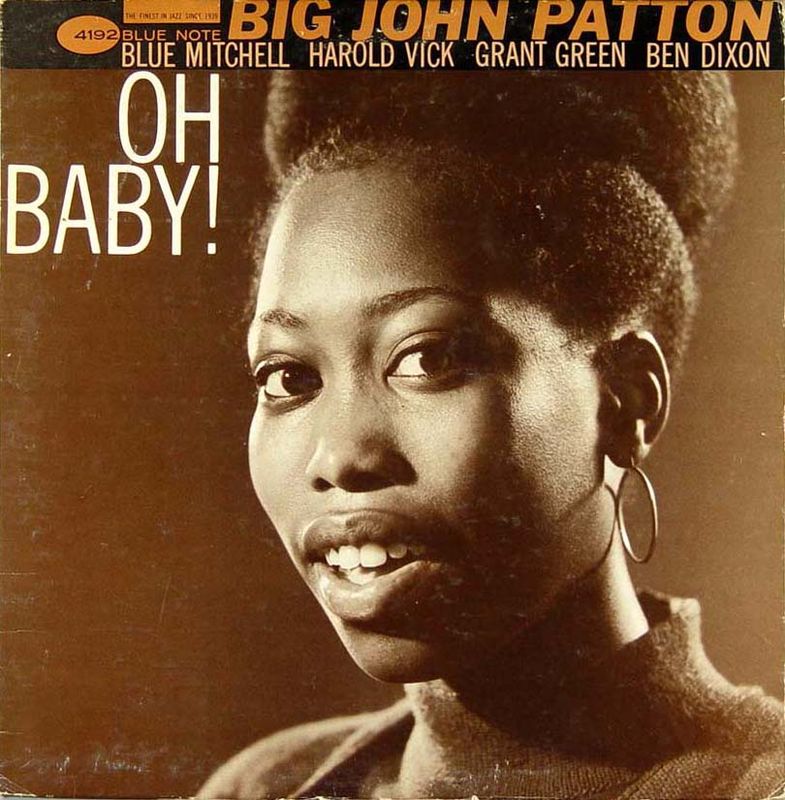
Big John Patton • Oh Baby


Review:
Patton's fourth album for Blue Note. Big John Patton with Grant Green on guitar and Harold Vick on tenor sax. With tunes like "Fat Judy" and "Good Juice," there is no worry about there being a groove. The addition of a trumpet (Blue Mitchell) means you have a horn section, and this tends to be a little much now and again. Although a little on the light side, thanks to Patton and Green, the groove does go down.
by Michael Erlewine
https://www.allmusic.com/album/oh-baby%21-mw0000766666

///////

Reseña:
El cuarto álbum de Patton para Blue Note. Big John Patton con Grant Green en la guitarra y Harold Vick en el saxo tenor. Con temas como "Fat Judy" y "Good Juice", no hay que preocuparse de que haya un ritmo. La adición de una trompeta (Blue Mitchell) significa que tienes una sección de trompetas, y esto tiende a ser un poco demasiado de vez en cuando. Aunque un poco en el lado de la luz, gracias a Patton y Green, el surco se reduce.
por Michael Erlewine
https://www.allmusic.com/album/oh-baby%21-mw0000766666


Friday, July 17, 2026

Don Wilkerson • Shoutin'


 Artist Biography
The archetypal big-toned Texas tenor of Don Wilkerson was unfortunately not documented on record as much as the quality of his music deserved; he was an excellent, earthy soul-jazz saxophonist capable of playing blues, ballads, bop, swing, and gospel-tinged R&B. Wilkerson was born in Moreauville, LA, in 1932, and first learned the alto sax; by his teens, he had moved to Houston and was accomplished enough on tenor to play with R&B outfits headed by Amos Milburn and Charles Brown. Wilkerson played on some of Ray Charles' earliest recording sessions in the mid-'50s, taking memorable solos on classics like "I Got a Woman," "This Little Girl of Mine," and "Hallelujah I Love Her So." He also led a band in Miami for a short time, and participated in numerous jam sessions with Cannonball Adderley. Adderley produced Wilkerson's first recording session, a 1960 date for Riverside titled The Texas Twister. After another short stint with Charles, he signed with Blue Note and recorded three stellar, soulful albums over 1962-1963: Elder Don, Preach, Brother!, and Shoutin', all of which featured Grant Green on guitar. Unfortunately, none was very successful, and Wilkerson didn't record any further as a leader. He remained in Houston for most of his life and passed away on July 18, 1986.
Steve Huey
https://www.allmusic.com/artist/don-wilkerson-mn0000161996/biography

///////

 Biografía del artista
El arquetípico tenor tejano de Don Wilkerson no estaba, por desgracia, tan documentado en los archivos como merecía la calidad de su música; era un excelente saxofonista de soul-jazz terrenal capaz de tocar blues, baladas, bop, swing y R&B con matices de gospel. Wilkerson nació en Moreauville, Los Ángeles, en 1932, y aprendió primero el saxo alto; en su adolescencia, se había mudado a Houston y tenía suficiente experiencia en el tenor como para tocar con equipos de R&B dirigidos por Amos Milburn y Charles Brown. Wilkerson tocó en algunas de las primeras sesiones de grabación de Ray Charles a mediados de los 50, haciendo memorables solos en clásicos como "I Got a Woman", "This Little Girl of Mine" y "Hallelujah I Love Her So". También dirigió una banda en Miami por un corto tiempo, y participó en numerosas jam sessions con Cannonball Adderley. Adderley produjo la primera sesión de grabación de Wilkerson, una fecha de 1960 para Riverside titulada "The Texas Twister". Después de otra corta temporada con Charles, firmó con Blue Note y grabó tres álbumes estelares y conmovedores durante 1962-1963: Elder Don, Preach, Brother!, y Shoutin', todos ellos con Grant Green a la guitarra. Por desgracia, ninguno tuvo mucho éxito, y Wilkerson no grabó más como líder. Permaneció en Houston la mayor parte de su vida y falleció el 18 de julio de 1986.
Steve Huey
https://www.allmusic.com/artist/don-wilkerson-mn0000161996/biography


Saturday, July 11, 2026

Friday, July 10, 2026

VA • Jazz Groove


Dr. Lonnie Smith, Bobbi Humphrey, Donald Byrd, Jimmy McGriff, Grant Green, Brother Jack McDuff, Jimmy Smith, Return To Forever, Gary Bartz, Pat Martino, Kenny Burrell, Roy Ayers, Lou Donaldson, Don Byron …


Houston Person • Legends of Acid Jazz


Review by Chris Slawecki  
Houston Person was among the guttiest of the gutbucket saxophonists of the soul-jazz golden age -- for proof, look no further than Legends of Acid Jazz: Houston Person, which compiles two of the saxman's most popular releases, Person to Person! and Houston Express (both originally released in 1970). Express featured the "funkmaster general" of the tenor saxophone with a tight, pocket-sized ensemble (including guitarist Grant Green and drummer Idris Muhammad), while, on Person!, his supporting ensemble expanded to include trumpet players Cecil Bridgewater and Thad Jones, guitarist Billy Butler and another kindred spirit and prince of funk on his instrument, Motown bassist Gerry Jemmott.

Legends of Acid Jazz: Houston Person provides a high-voltage cover version extravaganza, including "(For God's Sake) Give More Power to the People" (the Chi-Lites), "Close to You" (the Carpenters), "Yester-Me, Yester-You, Yester-Day" (Stevie Wonder), "Young, Gifted and Black" (Aretha Franklin), "Just My Imagination" (the Temptations), and "Lift Every Voice and Sing," which Person describes in his liner notes as the "black national anthem." Person and friends turn every one of these, and others such as his own "Up at Joe's, Down at Jim's" and his trademark "The Houston Express" into stinging, swinging, original-sounding opuses of funk.
https://www.allmusic.com/album/legends-of-acid-jazz-mw0000615833

///////


Reseña de Chris Slawecki  
Houston Person fue uno de los saxofonistas más agresivos de la época dorada del soul-jazz. Para comprobarlo, no hay más que ver Legends of Acid Jazz: Houston Person, que recopila dos de los lanzamientos más populares del saxofonista, Person to Person! y Houston Express (ambos publicados originalmente en 1970). Express presentaba al "funkmaster general" del saxofón tenor con un conjunto ajustado y de bolsillo (que incluía al guitarrista Grant Green y al batería Idris Muhammad), mientras que, en Person!, su conjunto de apoyo se ampliaba para incluir a los trompetistas Cecil Bridgewater y Thad Jones, al guitarrista Billy Butler y a otro espíritu afín y príncipe del funk en su instrumento, el bajista de la Motown Gerry Jemmott.

Leyendas del Acid Jazz: Houston Person ofrece una extravagancia de versiones de alto voltaje, incluyendo "(For God's Sake) Give More Power to the People" (los Chi-Lites), "Close to You" (los Carpenters), "Yester-Me, Yester-You, Yester-Day" (Stevie Wonder), "Young, Gifted and Black" (Aretha Franklin), "Just My Imagination" (los Temptations), y "Lift Every Voice and Sing", que Person describe en sus notas como el "himno nacional negro". "Person y sus amigos convierten cada una de estas canciones, y otras como la suya propia "Up at Joe's, Down at Jim's" y su característica "The Houston Express", en punzantes y originales opus de funk.
https://www.allmusic.com/album/legends-of-acid-jazz-mw0000615833


Thursday, June 25, 2026

VA • The Hard Bop Years - Rudy Van Gelder Masters


Compilation of RVG's masters, 99 tracks.

Art Blakey, Grant Green, Wayne Shorter, Bobby Hutcherson, Kenny Burrell, Cannonball Adderley, Ike Quebec, Jimmy Smith, Joe Henderson, Horace Silver, Sonny Rollins, Clifford Jordan, Blue Mitchell, Thelonious Monk, J.J. Johnson, Freddie Hubbard, Lee Morgan, Jackie McLean, Lou Donaldson, Dexter Gordon, Stanley Turrentine ...


Wednesday, June 17, 2026

VA ‎• Blue Funk


Brother Jack McDuff, Blue Mitchell, Lou Donaldson, John Patton, Grant Green, Candido, Richard ''Groove'' Holmes, Ronnie Foster, Reuben Wilson, Bobby Hutcherson.


Friday, June 12, 2026

Johnny Hodges & Wild Bill Davis • Joe's Blues


Editorial Reviews
Second installment in this four volume series from the celebrated jazzmen with deep Blues roots, a prolific musical team with exquisite chemistry. Volume Two includes the two complete albums Joe's Blues and Wings & Things, in which guitarist Grant Green plays with the two masters. Lonehill.

///////

Reseñas editoriales
Segunda entrega de esta serie de cuatro volúmenes de los célebres jazzmen con profundas raíces Blues, un prolífico equipo musical con exquisita química. El volumen dos incluye los dos álbumes completos Joe's Blues y Wings & Things, en los que el guitarrista Grant Green toca con los dos maestros. Lonehill
 

Tuesday, June 9, 2026

Larry Young • Into Somethin'


While most practitioners of the instrument have followed closely on the heels of Jimmy Smith, on Into Somethin', Larry Young demonstrates his unique horn-like approach to melody. With the help of Sam Rivers (saxophone), Grant Green (guitar), and Elvin Jones (drums), Young puts forth a swinging collection of tunes that isn't particularly drenched in the traditional gospel/soul sound usually produced by an organ ensemble. Instead, this is a crisp, exciting session that, along with Unity, would eventually help make Young one of the legends of the B-3. The effortless waltzing bounce of "Tyrone" opens the set as Rivers and Young glide through the melody while Jones swings intensely in the background. The heavy Latin groove of "Plaza de Toros" sets up some stunning rhythmic interactions between Grant, Young, and Jones. The intricate "Paris Eyes" and the bluesy "Backup" are both excellent swinging numbers that further display Young's non-traditional approach to the instrument and his masterful soloing prowess. Finally, the classic "Ritha" is an exhilarating composition that displays the full wealth of Young's legendary abilities.

///////

Mientras que la mayoría de los practicantes del instrumento han seguido de cerca los pasos de Jimmy Smith, en Into Somethin', Larry Young demuestra su enfoque único de la melodía, similar al de las trompetas. Con la ayuda de Sam Rivers (saxofón), Grant Green (guitarra), y Elvin Jones (batería), Young presenta una colección de melodías que no está particularmente empapada en el tradicional sonido de gospel/soul que normalmente produce un conjunto de órgano. En su lugar, esta es una sesión nítida y emocionante que, junto con Unity, ayudaría eventualmente a convertir a Young en una de las leyendas del B-3. El rebote de vals sin esfuerzo de "Tyrone" abre el set mientras Rivers y Young se deslizan por la melodía mientras Jones se balancea intensamente en el fondo. El pesado ritmo latino de "Plaza de Toros" establece algunas sorprendentes interacciones rítmicas entre Grant, Young y Jones. Los intrincados "Paris Eyes" y el bluesero "Backup" son ambos excelentes números de swing que muestran aún más el enfoque no tradicional de Young hacia el instrumento y su magistral destreza como solista. Por último, el clásico "Ritha" es una estimulante composición que muestra toda la riqueza de las legendarias habilidades de Young.


Sunday, May 31, 2026

VA • The Greatest Soul Jazz


Ray Charles, Cannonball Adderley, Sonny Stitt, Gene Ammons, Roy Ayers, Donald Byrd, Stanley Turrentine, Horace Silver, Grant Green, Hank Mobley, George Benson, Jimmy Smith, Kenny Burrell, Jimmy McGriff, Ray Bryant, Lee Morgan.


Wednesday, March 11, 2026

Don Wilkerson • The Complete Blue Note Sessions


By DAVID ADLER
One of the paragons of the "Texas tenor" style, Don Wilkerson gained his greatest notoriety as a soloist with Ray Charles throughout much of the 50s and 60s. Less known is Wilkerson’s limited work as a leader, the majority of which is collected on this two-disc package from Blue Note. Wilkerson made three albums for the label during the fruitful years of 1962 and 1963: Preach Brother!, Elder Don, and Shoutin’! All three records feature guitarist Grant Green, who certainly knows how to cook in such a setting. The first also boasts a classic Blue Note rhythm section: Sonny Clark on piano, Butch Warren on bass, and Billy Higgins on drums, with Jual Curtis sitting in on tambourine on "Dem Tambourines" and "Camp Meetin’." On the second album, Johnny Acea takes over on piano, with Lloyd Trotman on bass and Willie Bobo on drums. The last of the three sessions is particularly down and dirty, with Green, John Patton on organ and Ben Dixon on drums.
The prevailing ethos of Preach Brother! is simply summarized: blues, blues, and more blues. And not the fancied-up bebop variety, but straight-up shuffle and boogie and soul. Every track is a blues except for the closer, "Pigeon Peas," a funky thing in AABA form. The two later albums are a bit more compositionally varied. Wilkerson begins Elder Don with exquisitely singing tenor work on "Senorita Eula" and then salutes his fellow Texan Bob Wills with "San Antonio Rose." (Grant Green’s solo on the latter has to be heard to be believed.) From this point on there’s still plenty of blues, but Wilkerson breaks it up with originals like "Scrappy" and "Drawin’ a Tip." He also showcases a totally different aspect of his talent on the ballads "Poor Butterfly" and "Easy Living."

///////

 Por DAVID ADLER
Uno de los parangones del estilo "tenor de Texas", Don Wilkerson ganó su mayor notoriedad como solista con Ray Charles durante gran parte de los años 50 y 60. Menos conocido es el limitado trabajo de Wilkerson como líder, la mayoría del cual se recoge en este paquete de dos discos de Blue Note. Wilkerson hizo tres álbumes para la discográfica durante los fructíferos años de 1962 y 1963: Preach Brother!, Elder Don, y Shoutin'! Los tres discos cuentan con la participación del guitarrista Grant Green, que ciertamente sabe cómo cocinar en un ambiente así. El primero también cuenta con una sección rítmica clásica de Blue Note: Sonny Clark en el piano, Butch Warren en el bajo, y Billy Higgins en la batería, con Jual Curtis en la pandereta en "Dem Tambourines" y "Camp Meetin'". En el segundo álbum, Johnny Acea se hace cargo del piano, con Lloyd Trotman en el bajo y Willie Bobo en la batería. La última de las tres sesiones es particularmente baja y sucia, con Green, John Patton en el órgano y Ben Dixon en la batería.
El espíritu prevaleciente del Predicador Hermano! se resume simplemente: blues, blues y más blues. Y no la variedad de bebop de fantasía, sino el shuffle y el boogie y el soul. Cada canción es un blues excepto la más cercana, "Pigeon Peas", una cosa funky en forma de AABA. Los dos álbumes posteriores son un poco más variados en cuanto a la composición. Wilkerson comienza Elder Don con un exquisito trabajo de tenor en "Señorita Eula" y luego saluda a su compañero tejano Bob Wills con "San Antonio Rose". (El solo de Grant Green en esta última tiene que ser escuchado para ser creído.) A partir de aquí todavía hay mucho blues, pero Wilkerson lo rompe con originales como "Scrappy" y "Drawin' a Tip". También muestra un aspecto totalmente diferente de su talento en las baladas "Poor Butterfly" y "Easy Living".


Sunday, December 21, 2025

Grant Green • Remembering


Grant Green • Remembering [LP]


One of the sad stories of jazz Green was dead by 43.  An admirer of Charlie Parker, Green played the guitar in a minimal way avoiding the clutter of chords.  Like Parker he never strays far from blues inflected playing.  It is a pity that he recorded so much with organ players. The purity of his sound and the clarity of his lines are obscured. In a way this pianoless session with Ware and Harewood fits with his playing. Green enjoys the freedom of the sparse backgrounds and takes off on all the pieces, mainly standards.

This is a relaxed session, no histrionics. If there is a criticism the album is a little one paced. However, the listener gets a chance to appreciate the lucidity and invention of Grant’s lines and to realise that the apparent simplicity is not what it seems.  This is about improvisation in its purest sense, the no place to hide sense, the ‘I am not going to blast you with volume or flashy technique sense’. Beautiful standards where you can follow the line of thought, appreciate the nuances of interpretation and admire the structure.

The two Woody’N’You tracks are extras from a session with pianist Sonny Clark. Apparently this was the only time that the guitarist recorded the Dizzy Gillespie piece.

The music is very well packaged and there are two informative essays.

If I could only have one album by Grant Green this would be it.  It has the essence. If you don’t know the work of Grant Green what a good place to start.

Reviewed by Jack Kenny / http://www.jazzviews.net/grant-green-trio---remembering-grant-green.html

///////

Traducción Automática:
Una de las tristes historias del jazz Green murió a los 43 años. Como admirador de Charlie Parker, Green tocó la guitarra de una manera mínima, evitando el desorden de los acordes. Al igual que Parker, nunca se aleja del blues. Es una pena que haya grabado tanto con los músicos de órgano. La pureza de su sonido y la claridad de sus líneas están oscurecidas. En cierto modo, esta sesión sin piano con Ware y Harewood encaja con su forma de tocar. Green disfruta de la libertad de los fondos dispersos y despega en todas las piezas, principalmente en los estándares.

Esta es una sesión relajada, sin histrionismo. Si hay una crítica el álbum es un poco de ritmo. Sin embargo, el oyente tiene la oportunidad de apreciar la lucidez y la invención de las líneas de Grant y darse cuenta de que la aparente simplicidad no es lo que parece. Se trata de la improvisación en su sentido más puro, el lugar donde no se puede esconder el sentido, el ‘No te voy a sorprender con el sentido del volumen o la técnica llamativa’. Hermosos estándares donde se puede seguir la línea de pensamiento, apreciar los matices de la interpretación y admirar la estructura.

Las dos pistas de Woody’N’You son extras de una sesión con el pianista Sonny Clark. Aparentemente esta fue la única vez que el guitarrista grabó la pieza de Dizzy Gillespie.

La música está muy bien empaquetada y hay dos ensayos informativos.

Si solo pudiera tener un álbum de Grant Green, sería este. Tiene la esencia. Si no conoce el trabajo de Grant Green, es un buen lugar para comenzar.

Revisado por Jack Kenny / http://www.jazzviews.net/grant-green-trio---remembering-grant-green.html


Thursday, October 23, 2025

VA • Pure Latin Jazz


Cal Tjader, Eddie Palmieri, Dave Pike, Sergio Mendes, Herbie Mann, Charlie Parker, Ramsey Lewis, Dizzy Gillespie, Gato Barbieri, Tito Puente, Astrud Gilberto, Antonio Carlos Jobim, Grant Green, Michel Camilo …


Tuesday, September 30, 2025

Brother Jack McDuff • Goodnight , It's Time to Go + Honey Dripper


This release presents two complete original LPs by Brother Jack McDuff: Goodnight, It's Time to Go (Prestige PRLP7220), and The Honeydripper (Prestige PRLP7199). Both albums showcase the organist in a quartet format with the brilliant guitarist Grant Green. (This CD includes all of their quartet recordings together under the leadership of McDuff. They also participated on two other quartet albums, one under Green's name, and the other under Lou Donaldson's). As a bonus, “Godiva Brown”, a song that completes the Goodnight, It's Time to Go sessions but wasn't included on the original LP.


 Biography :
A marvelous bandleader and organist as well as capable arranger, "Brother" Jack McDuff has one of the funkiest, most soulful styles of all time on the Hammond B-3. His rock-solid basslines and blues-drenched solos are balanced by clever, almost pianistic melodies and interesting progressions and phrases. McDuff began as a bassist playing with Denny Zeitlin and Joe Farrell. He studied privately in Cincinnati and worked with Johnny Griffin in Chicago. He taught himself organ and piano in the mid-'50s, and began gaining attention working with Willis Jackson in the late '50s and early '60s, cutting high caliber soul-jazz dates for Prestige. McDuff made his recording debut as a leader for Prestige in 1960, playing in a studio pickup band with Jimmy Forrest. They made a pair of outstanding albums: Tough Duff and The Honeydripper. McDuff organized his own band the next year, featuring Harold Vick and drummer Joe Dukes. Things took off when McDuff hired a young guitarist named George Benson. They were among the most popular combos of the mid-'60s and made several excellent albums. McDuff's later groups at Atlantic and Cadet didn't equal the level of the Benson band, while later dates for Verve and Cadet were uneven, though generally good. McDuff experimented with electronic keyboards and fusion during the '70s, then in the '80s got back in the groove with the Muse session Cap'n Jack. While his health fluctuated throughout the '90s, McDuff released several discs on the Concord Jazz label before succumbing to heart failure on January 23, 2001, at the age of 74. ~ Ron Wynn and Bob Porter.

///////

Este lanzamiento presenta dos LPs originales completos del hermano Jack McDuff: Goodnight, It's Time to Go (Prestige PRLP7220), y The Honeydripper (Prestige PRLP7199). Ambos álbumes muestran al organista en formato de cuarteto con el brillante guitarrista Grant Green. (Este CD incluye todas las grabaciones de su cuarteto juntas bajo la dirección de McDuff. También participaron en otros dos álbumes de cuarteto, uno bajo el nombre de Green y el otro bajo el de Lou Donaldson). Como bonus, "Godiva Brown", una canción que completa las sesiones de Goodnight, It's Time to Go pero que no fue incluida en el LP original.


 Biografía :
Un maravilloso director de banda y organista así como un arreglista capaz, "Brother" Jack McDuff tiene uno de los estilos más funky y más conmovedor de todos los tiempos en el Hammond B-3. Sus líneas de bajo sólidas como el rock y sus solos empapados de blues están equilibrados por melodías inteligentes, casi pianísticas y progresiones y frases interesantes. McDuff comenzó como bajista tocando con Denny Zeitlin y Joe Farrell. Estudió de forma privada en Cincinnati y trabajó con Johnny Griffin en Chicago. Se enseñó a sí mismo a tocar el órgano y el piano a mediados de los años 50, y comenzó a llamar la atención trabajando con Willis Jackson a finales de los 50 y principios de los 60, cortando fechas de soul-jazz de alto calibre para Prestige. McDuff hizo su debut discográfico como líder para Prestige en 1960, tocando en una banda de estudio con Jimmy Forrest. Hicieron un par de álbumes excepcionales: Tough Duff y The Honeydripper. McDuff organizó su propia banda al año siguiente, con Harold Vick y el baterista Joe Dukes. Las cosas despegaron cuando McDuff contrató a un joven guitarrista llamado George Benson. Estaban entre los combos más populares de mediados de los 60 e hicieron varios álbumes excelentes. Los grupos posteriores de McDuff en Atlantic y Cadet no igualaron el nivel de la banda de Benson, mientras que las fechas posteriores de Verve y Cadet fueron desiguales, aunque en general buenas. McDuff experimentó con los teclados electrónicos y la fusión durante los años 70, luego en los 80 volvió a la onda con la sesión de Muse Cap'n Jack. Mientras que su salud fluctuó a lo largo de los años 90, McDuff publicó varios discos en el sello Concord Jazz antes de sucumbir a una insuficiencia cardíaca el 23 de enero de 2001, a la edad de 74 años. ~ Ron Wynn y Bob Porter